

Farshchian Specialized Heart Hospital :
|
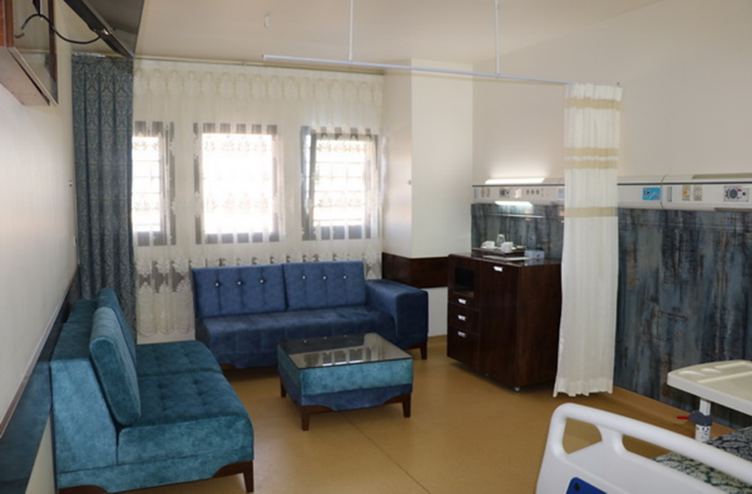
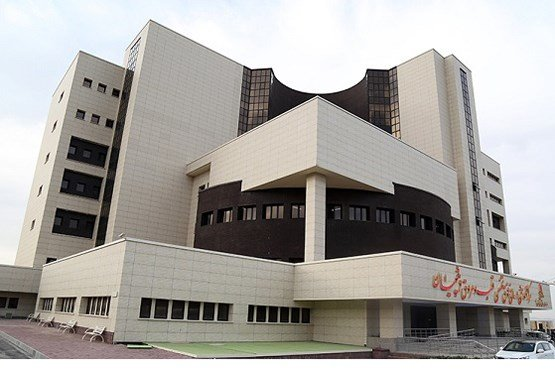
Welcome to Farshchian Cardiovascular Subspecialty Medical Center |
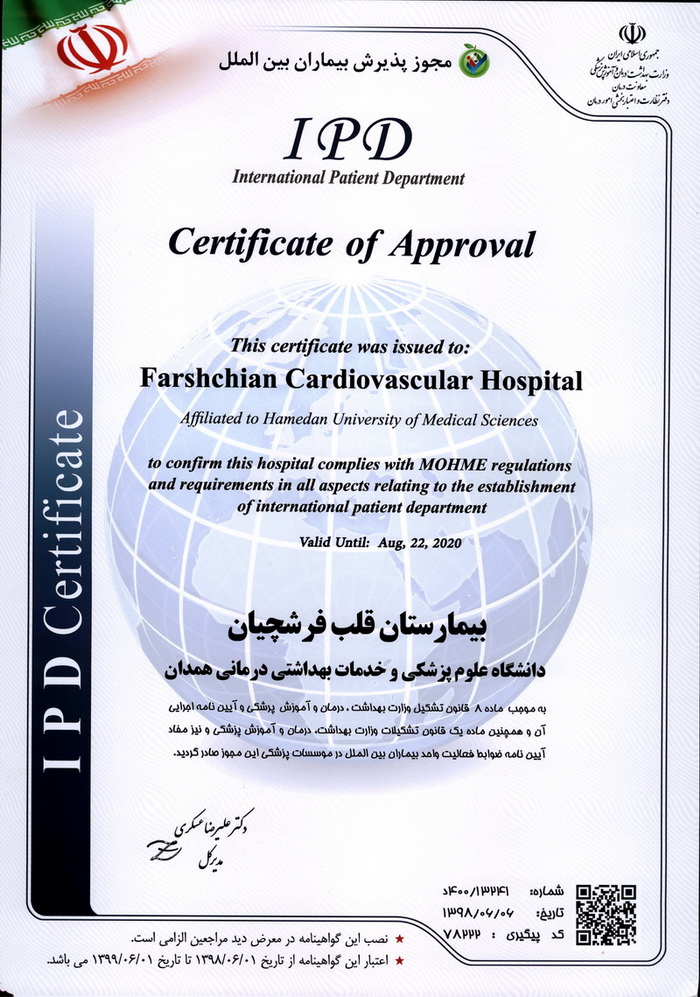
Farshchian Cardiovascular Medical Research and Training Hospital
Dear friend
We welcome you to our hospital. We hope you will be discharged from our hospital in good health
Our goal in this center is to provide the best quality medical services at the lowest cost
While visiting our site, you can also communicate with us through the center's e-mails
Also, at the bottom of the page, you can send your comments or questions with the electronic form placed under the site, and we will contact you as soon as possible
Good luck
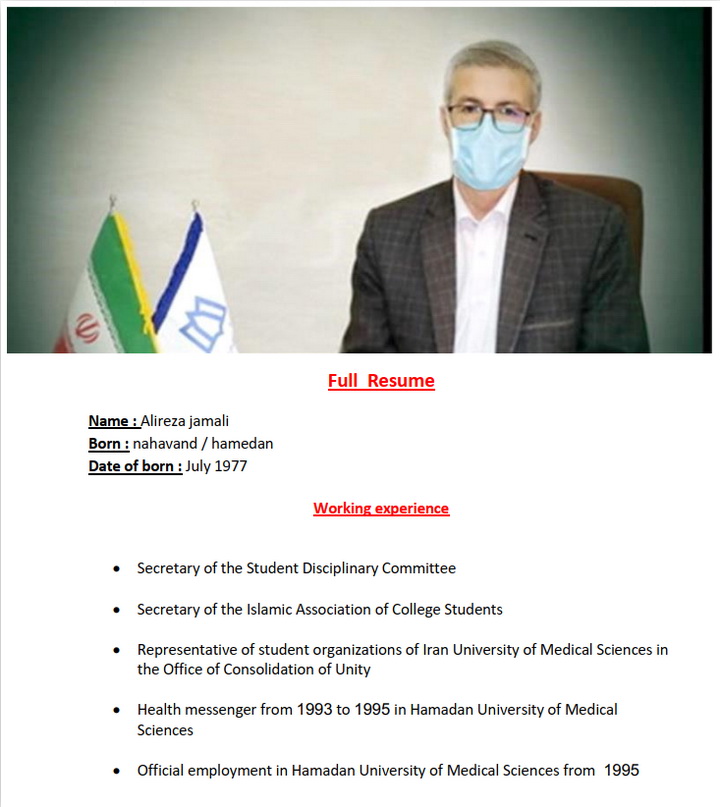
Dr . amir hossein yazdi
angioplasty & angiography surgeon
With 10 years of work experience
More than 2000 surgeries
Farshchian Cardiovascular Medical Research and Training Hospital
About our Center
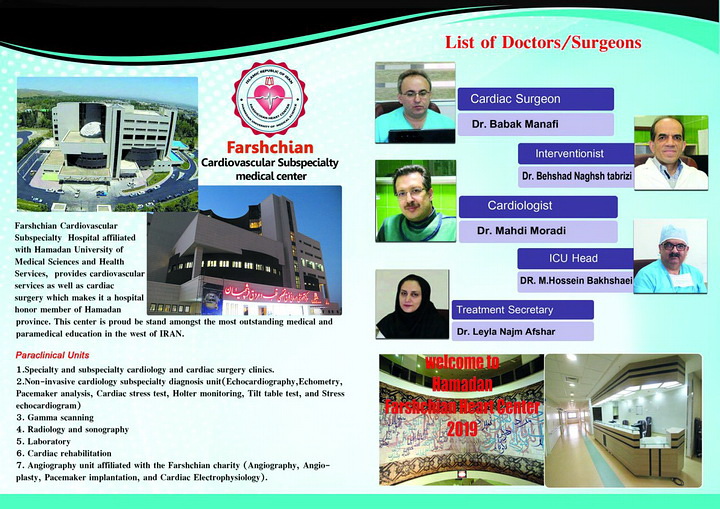
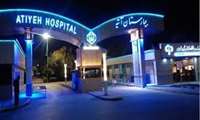
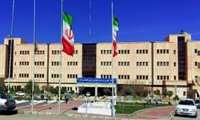
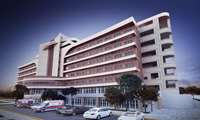
Affiliated with Hamadan University of Medical Sciences and Health Care Services, the Farshchian Cardiovascular Medical Research and Training Hospital، provides specialty and subspecialty cardiovascular services as well as cardiac surgery which makes it a hospital honor roll member of Hamadan province. This center is proud to stand amongst the most outstanding medical and paramedical education hubs around the country
Paraclinical Units
Specialty and subspecialty cardiology and cardiac surgery clinics, non-invasive cardiology subspecialty diagnosis unit (echocardiography, echomery, pacemaker analysis, cardiac stress test, Holter monitoring, tilt table test, and stress echocardiogram), gamma scanning, radiology and sonography, laboratory, cardiac rehabilitation, angiography unit affiliated with the Farshchian charity (angiography, angioplasty, pacemaker implantation, and cardiac electrophysiology)
Inpatient wards floor plan
Ground floor: information, emergency ward, pharmacy, bank and cashier, clinic, prevention and health promotion unit, laboratory, non-invasive cardiac service ward, patient release office, revenues, health information management, information technology management, human resources management, public relations, prayer room, buffet, copy room, financial affairs, procurement department, telecommunications, security, social work office, reception, Heart Charity Association office, International patients reception
1st floor
Cardiac surgery operating room, ICU (1), angiography, rehabilitation, quality improvement/patients complaints & grievances office, cardiac surgery queuing, ICU visiting intercom system room (ICU visual visiting room)
2nd floor
Managers’ office, office of the CEO and president, hospital guardian, ICU (2) (A & B), nursing service administration, CCU (2) (A&B), clinical supervisor, infection control supervisor, Educational supervisor and general control unit
3rd floor
Medical education unit, clinical skills room, pavilions, conference hall, cafeteria, library and educational laboratory
4th floor
CCU (4) (A, B, &C), nursery and paramedical faculty members room, crisis management unit
5th floor
Cardiology Ward 5A & 5B
6th floor
Cardiology Ward 6A & 6B
-1 th floor
Radiology & sonography, gamma scanning, medical engineering, warehouse, statistics, nutrition, kitchen, autoclave (CSSD), laundry, building management system (BMS), environmental and occupational health management, trustee of public property
Admission information
Documents needed for hospitalization
The attending physician order
Health insurance card
At the time of a visit to the hospital, make sure your insurance card is with you. The admission unit keeps it till the insurance agent comes to confirm your hospitalization. Therefore, stay in your room the day after you are hospitalized
In the case you have supplemental insurance, get a letter of introduction from the related insurance company to submit to the hospital.
passport
Two copies of the patient’s passport
Admission notifications
Rules Related to Patient Admission
The patients who have not reached the legal age yet (less than 18 years old), consent of hospitalization and surgical procedures is obtained from the father, so he should be present with his ID card at the time of admission. In case the father has passed away, paternal grandfather or the legal guardian should be present at the time of admission, having their passport with themselves.
For women’s surgery, the presence of her husband and ID card of both couples are necessary.
At the time of delivery, the presence of the husband and Melli and ID card of both couples are required
Complaints/ recommendations/criticisms or viewpoints submission channels
In written form; through the recommendations/criticisms boxes as well as survey desks.
Through our website at: hcvc.umsha.ac.ir or e-mail at: hcvc@umsha.ac.ir
Over the phone (during office hours); calling the quality improvement/ patients’ complaints & grievances office at: direct No. 38381752/ ext.2128.
Over the phone (during non-office hours) calling the supervisor on duty at+989186754219
Via direct contact with experts of the vice chancellor for treatment of the university, calling at +989187498540, interactive voice response at: 1590, or interactive SMS at: 20001590.
Please note that any Complaints/ recommendations/criticisms will be immediately considered and due measures will be taken. Also, if your contact information is available, you will be informed of the result.
Patient’s Rights Prism
Notifications for patients release
Patients release starts every day at 11:00 AM
Please complete all the insurance documents during hospitalization and before release to avoid delayed release
Patients are released after the visited by the physicians and the release order is recorded. You may complete insurance documents and after coordination with the ward secretariat, refer to the release unit
After proceeding with all the release steps, deliver the patient release document to the ward secretariat and ask for medical record summery
Notes
All payments must be done o the cashier and must be a printed receipt
It is worth noting that it is important to keep the medical record summary and medical history carefully for future reference at this center
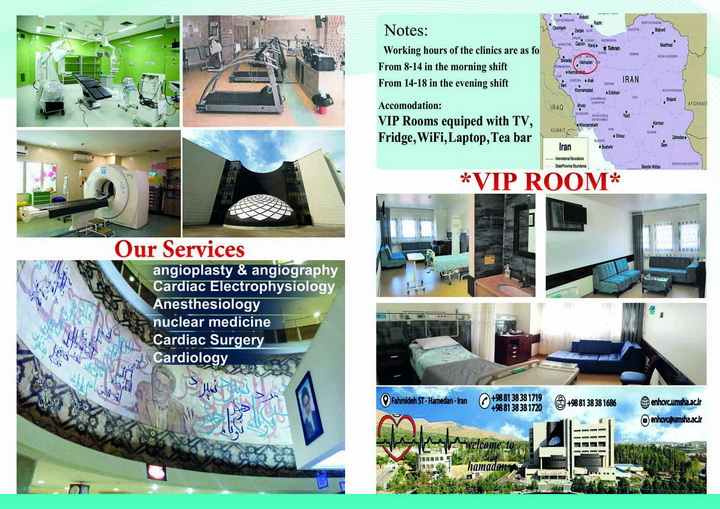
Working hours of the clinic are as follows
From 8-14 in the morning shift
From 14-18 in the evening shift
It should be pointed out that queuing is done personally in the clinic and in both morning and evening shifts
Farshchian Cardiovascular Medical Research and Training Hospital
operation report 2017-2018
Farshchian Cardiovascular Medical Research and Training Hospital
Admission information
Documents needed for hospitalization
The attending physician order
passport
At the time of admission , make sure your insurance card is with you. The admission unit keeps it till the insurance agent comes to confirm your hospitalization. Therefore, stay in your room the day after you are hospitalized
In the case you have supplemental insurance, get a letter of introduction from the related insurance company to submit to the hospital
Two copies of the patient’s passportpassport
Admission notifications:
Rules Related to Patient Admission
The patients who have not reached the legal age yet (less than 18 years old), consent of hospitalization and surgical procedures is obtained from the father, so he should be present with his ID card at the time of admission. In case the father has passed away, paternal grandfather or the legal guardian should be present at the time of admission, having their ID card with themselves
For women’s surgery, the presence of her husband and ID card of both couples are necessary
At the time of delivery, the presence of the husband and Melli and ID card of both couples are required
Farshchian Cardiovascular Medical Research and Training Hospital
Patient’s Right
Receiving good health care
Providing health care services should be as follows
In accordance with human dignity and with respect for the values and cultural and religious beliefs
Based on honesty, fairness, courtesy and kindness
Without any discrimination, including ethnic, cultural, religious, and gender as well as any discrimination based on the type of the disease
Based on the latest knowledge
Based on the superiority of patient interests
Based on distribution of health resources with respect to patient safety, fairness and patients' treatment preferences
Based on coordination of health care components including prevention, diagnosis, treatment and rehabilitation
Based on offering all the basic and required facilities and without suffering any pain and imposing unnecessary limitations
Based on special attention to the rights of vulnerable groups such as children, pregnant women, the elderly, mentally ill people, prisoners, physically and mentally disabled people and children having no parents
As fast as possible and with respect to patient time
Based on considering variables such as language, age and gender of service recipients.
Performed immediately and with no delay in emergency condition, without respect to the cost of it. In non-emergency (elective) cases, services should be offered based on the defined rules.
In emergency cases, if the proper services are not possible, patient should be transferred to an equipped section after receiving necessary services.
In the condition that the patient death is imminent, the services should be provided with respect to keep patient’s convenience and calmness. By alleviating patient’s pain we mean giving attention to psychological, social, spiritual and emotional needs of the patient and his family. It is the right of the patient to be with the person he wants at the last moment of his life.
The Heart rehabilitation department with an area of about 350 square meters is one of the most equipped centers in rehabilitation. The department, having adopted experienced team from among the university professors and being armed with the state-of-the-art technological equipment, provides inpatient and outpatient services to the clients in two shifts, morning and evening. It has four rooms that are equipped with the most modern technological instruments. In this department, there is an exclusive section for exercise therapy and heart rehabilitation. Physiotherapists are well-versed with the necessary skills to provide a variety of specialized techniques and manual therapy in Heart diseases .The specialists’ staff are under continuous education and training and use new technology and methods of treatment strategically. The professional staff pay particular attention to physiological and affective needs of the patients so that they feel totally satisfied. Physiotherapy services are tailored to the patients in each of Heart surgery, ICU or CCU departments. The services, which are provided constantly and daily, aim to prevent complications from surgery and hospitalization
This section is located in Below Ground Floor of the hospital. The division, which is equipped with advanced Dual Head device, provides diagnostic and, in some special cases, therapeutic services
Farshchian laboratory complex includes emergency laboratory, central laboratory (department of biochemistry, hematology and coagulation, immunology, serology, fluid analysis , bacteriology, mycology, blood gases and electrophoresis), blood banks and outpatient labs. The complex has recruited medical university professors expert and experienced in clinical laboratory sciences, clinical microbiology, clinical immunology
the center is ready to provide excellent services to the clients. In addition, it makes it possible for different national insurance organizations to support their clients. The services include: Specific biochemical tests, immunology, hematology and coagulation, serology, analysis of body fluids and blood gas, infertility and hormone testing, cross-match tests and blood banks and immunofluorescent tests, etc
This center is located in the first floor Below Ground of the hospital building and fulfills the medical needs of patients for a particular imaging procedure. Radiation protection standards have been fully observed in this section and radiology specialists and experienced experts are available to be at your service 24-hours a day, 7 days a week, even on holidays
A pacemaker insertion is the implantation of a small electronic device that is usually placed in the chest (just below the collarbone) to help regulate slow electrical problems with the heart. A pacemaker may be recommended to ensure that the heartbeat does not slow to a dangerously low rate
The valuable feature of this department is the presence of prominent and expert surgeons who perform various and complex cardiovascular surgeries. Some of the cardiovascular surgeries performed in this unit are the following
Surgical repair and replacement of heart valves
Coronary artery bypass graft (CABG
Aneurysm surgery
Congenital Heart Diseases surgery
Minimally invasive cardiac surgeries
The angiography unit of farshchian Hospital enjoying the most advanced and modern angiography system performs angiography (as a diagnostic method) and angioplasty (as a therapeutic method) of the cardiac, cerebral, renal, and peripheral vessels and so on. After diagnosing the severity of arterial stenosis, the patient can receive the specific medical therapy (drugs and diet) or undergo balloon angioplasty (as a short-term relief) or stent placement (as a long-term treatment). Before angiography, the patient should undergo echocardiography and exercise stress tests, both of which shall be performed in the clinic
In addition to the angiography system, this unit enjoys other required equipment including the most modern Echocardiography machines, Electrocardiography (ECG) devices
One of the unique features of this unit is the use of transradial rather than the transfemoral technique for angiography, which is less common in other centers and one of its advantages is the faster recovery of the patient
Also, this center enjoys different types of up-to-date balloons, stents, guide wires, and catheters which can be chosen based on each patient's specific conditions such as age, diabetes and so on
The interior design of the angiography unit is such that provides a peaceful and low tension atmosphere for the patients and personnel, and moreover, the use of a proper ventilation system has a significant effect on this atmosphere
The angiography unit of farshchian Hospital enjoying the most advanced and modern angiography system performs angiography (as a diagnostic method) and angioplasty (as a therapeutic method) of the cardiac, cerebral, renal, and peripheral vessels and so on. After diagnosing the severity of arterial stenosis, the patient can receive the specific medical therapy (drugs and diet) or undergo balloon angioplasty (as a short-term relief) or stent placement (as a long-term treatment). Before angiography, the patient should undergo echocardiography and exercise stress tests, both of which shall be performed in the clinic
In addition to the angiography system, this unit enjoys other required equipment including the most modern Echocardiography machines, Electrocardiography (ECG) devices
One of the unique features of this unit is the use of transradial rather than the transfemoral technique for angiography, which is less common in other centers and one of its advantages is the faster recovery of the patient
Also, this center enjoys different types of up-to-date balloons, stents, guide wires, and catheters which can be chosen based on each patient's specific conditions such as age, diabetes and so on
The interior design of the angiography unit is such that provides a peaceful and low tension atmosphere for the patients and personnel, and moreover, the use of a proper ventilation system has a significant effect on this atmosphere
Angioplasty, also known as balloon angioplasty and percutaneous transluminal angioplasty (PTA), is a minimally invasive, endovascular procedureto widen
narrowed or obstructed arteries or veins, typically to treat arterial atherosclerosis. A deflated balloon attached to a catheter (a balloon catheter) is passed over a
guide-wire into the narrowed vessel and then inflated to a fixed size. The balloon forces expansion of the blood vessel and the surrounding muscular wall,
allowing an improved blood flow. A stentmay be inserted at the time of ballooning to ensure the vessel remainsopen, and the balloon is then deflated and
withdrawn. Angioplasty has come to include all manner of vascular interventions that are typically performed percutaneously
.png)
.png)
.png)


address: Hamadan University of Medical Sciences Headquarters, Shahid Fahmideh St.
phone: 081-31310000
zip code: 6517838736
email : medical-tourism@umsha.ac.ir
پیوندهای مهم
لینک های پرکاربرد
انتقادات و پیشنهادات
Dear user, it is necessary to complete all the fields below.
فرم شماره 6 موجود نیستAll Rights Reserved.
اسپریت پورتال نیافامSelect color blind mode
red blindness green blindness blue blindness Red difficult to see Green is hard to see Blue difficult to see monochrome nose Monochrome conical noseChange font size :
Change the spacing between words:
Change the spacing between lines:
Change mouse type:
Change mouse type:
change_color:
primary color:
secondary color: